Skip to content
Chromedia
  • Our Work
  • Blog
Schedule A Call

WHAT WE DO

Engagement Models

Engineering TeamsManaged Software DevelopmentStaff Augmentation

Solutions

Custom Software DevelopmentAI Design & ImplementationAgentic AI DevelopmentAI IntegrationMobile App DevelopmentMVP DevelopmentLegacy Application ModernizationAPI Development

Services

AI ConsultingBackend EngineeringFrontend EngineeringiOS & Android App DevelopmentUI/UX DesignQuality EngineeringDevOps and Cloud Engineering

WHY CHROMEDIA

AI Development ProcessTop Talent Hiring ProcessStaff Augmentation

DISCOVER

Our WorkWho We AreBlogsContact UsCareers
Chromedia

© 1996 - 2026 Chromedia, Inc. All Rights Reserved.

production v30.1.5
Privacy PolicyCookie PolicyTerms of Use

Technologies›Vue.js Development

Vue.js Development Services for Scalable, High-Performance Web Applications

Component-driven Vue.js applications, progressive web applications, and Nuxt.js platforms delivered by senior engineers with AI-accelerated development and human-led governance at every stage.


Schedule a Vue.js Strategy Call
Cruisebound
Spoke Health
One Foot Productions
Portland Pedal Power
Styleteq
Fluid Gifts
iFlipd
MEDtrip
Hatch
Cambium Networks
MRIoA
EagleScreen
Geolens
Valid Eval
Capametrix
Cruisebound
Spoke Health
One Foot Productions
Portland Pedal Power
Styleteq
Fluid Gifts
iFlipd
MEDtrip
Hatch
Cambium Networks
MRIoA
EagleScreen
Geolens
Valid Eval
Capametrix
Cruisebound
Spoke Health
One Foot Productions
Portland Pedal Power
Styleteq
Fluid Gifts
iFlipd
MEDtrip
Hatch
Cambium Networks
MRIoA
EagleScreen
Geolens
Valid Eval
Capametrix
Cruisebound
Spoke Health
One Foot Productions
Portland Pedal Power
Styleteq
Fluid Gifts
iFlipd
MEDtrip
Hatch
Cambium Networks
MRIoA
EagleScreen
Geolens
Valid Eval
Capametrix
Cruisebound
Spoke Health
One Foot Productions
Portland Pedal Power
Styleteq
Fluid Gifts
iFlipd
MEDtrip
Hatch
Cambium Networks
MRIoA
EagleScreen
Geolens
Valid Eval
Capametrix
Cruisebound
Spoke Health
One Foot Productions
Portland Pedal Power
Styleteq
Fluid Gifts
iFlipd
MEDtrip
Hatch
Cambium Networks
MRIoA
EagleScreen
Geolens
Valid Eval
Capametrix
Cruisebound
Spoke Health
One Foot Productions
Portland Pedal Power
Styleteq
Fluid Gifts
iFlipd
MEDtrip
Hatch
Cambium Networks
MRIoA
EagleScreen
Geolens
Valid Eval
Capametrix
Cruisebound
Spoke Health
One Foot Productions
Portland Pedal Power
Styleteq
Fluid Gifts
iFlipd
MEDtrip
Hatch
Cambium Networks
MRIoA
EagleScreen
Geolens
Valid Eval
Capametrix
Cruisebound
Spoke Health
One Foot Productions
Portland Pedal Power
Styleteq
Fluid Gifts
iFlipd
MEDtrip
Hatch
Cambium Networks
MRIoA
EagleScreen
Geolens
Valid Eval
Capametrix
Cruisebound
Spoke Health
One Foot Productions
Portland Pedal Power
Styleteq
Fluid Gifts
iFlipd
MEDtrip
Hatch
Cambium Networks
MRIoA
EagleScreen
Geolens
Valid Eval
Capametrix
Cruisebound
Spoke Health
One Foot Productions
Portland Pedal Power
Styleteq
Fluid Gifts
iFlipd
MEDtrip
Hatch
Cambium Networks
MRIoA
EagleScreen
Geolens
Valid Eval
Capametrix
Cruisebound
Spoke Health
One Foot Productions
Portland Pedal Power
Styleteq
Fluid Gifts
iFlipd
MEDtrip
Hatch
Cambium Networks
MRIoA
EagleScreen
Geolens
Valid Eval
Capametrix

Where React Maximizes Flexibility and Angular Maximizes Structure, Vue Maximizes Pragmatism

Vue.js occupies a distinctive position in the frontend framework landscape. Where React prioritizes flexibility and ecosystem breadth, and Angular prioritizes enterprise structure and convention, Vue prioritizes approachability, clarity, and the pragmatic progressive adoption model that allows organizations to introduce it incrementally into existing applications without committing to a full architectural migration upfront. That pragmatism has made Vue one of the most widely adopted frontend frameworks in the world, particularly in European markets, enterprise applications, and engineering teams that value clean, readable code and a gentler learning curve over the ecosystem maximalism that React demands. The organizations building with Vue today are building enterprise dashboards and internal tools where Vue's component model and reactivity system reduce UI state complexity, SaaS platforms where the Composition API and TypeScript support provide the architectural discipline that long-running applications require, progressive web applications where Vue's lightweight footprint and Nuxt.js server-side rendering deliver the performance and SEO characteristics production web products need, and teams modernizing jQuery or server-rendered applications who need a migration path that does not require rebuilding everything at once.

Chromedia designs and builds Vue.js applications engineered for performance, maintainability, and the AI-ready architecture that modern web products require. Our approach is human-led at every stage, with senior Vue engineers making every architecture decision, governing every component system and composable design choice, and validating every release against performance, accessibility, and business logic requirements before it reaches production. AI tooling accelerates the repeatable parts of that process, compressing build timelines without removing the engineering judgment that determines whether a Vue application holds up at scale, under real-world conditions, and over the long term.

Schedule a Vue.js Strategy Call

Companies That Trust Chromedia

“

“Every engineer and product manager we had at Chromedia was both responsive and could be counted on to deliver. Every time.


Tyler Barber

CTO and Co-founder, Cruisebound

“

“They consistently produce solutions that are better than we had originally envisioned. They're very reasonably priced for the quality, speed, and value that we receive.


Linda Bernier

CEO, Spoke Health

“

“Their consistency stands out. Chromedia delivers what they say they're going to deliver in the timeframe and budget they promise. It's important as a business owner to be able to count on a partner like them.


Kevin Merritt

Owner, One Foot Productions

“

“For years we struggled to find a software development partner with the in house knowledge to build a high-quality product. Chromedia will help you tackle your software problems so you can focus on building your business.

Jenn Dederich

CEO and Owner, Portland Pedal Power

“

“It feels like we're one team. I'm very comfortable with them.

Leodus Thomas

CEO, Styleteq

“

“Keeping our clients happy is critical. Ensuring that our company is front-and-center in their minds is incredibly important, too. Using Fluid, we have improved our customer success operations considerably and contributed to more references, more revenue, and a better client experience.

Scott S.

Senior Manager, Customer Success, Fluid Gifts

“

“I find their developers to be more productive and communicative than many of the developers I've worked with in the US. I would highly recommend this team if you need any type of outsource help.


Keith Bristol

COO, iFlipd

“

“The product quality and experience with HIPAA compliance is extremely important, but really, it's that cultural alignment and the understanding of startups that made the decision easy to work with a boutique firm like Chromedia.


Richard Coyte

CEO, MEDtrip

“

“The team consistently exceeded expectations with not only their technical expertise but their ability to build relationships.


Jason Kallas

CEO, Hatch Marketing Plans

“

“Working with Chromedia, Inc. has been an absolute pleasure.

Seth Poche

Director, Cambium Networks

“

“Chromedia is great to work with. Their team members are knowledgeable, reliable, have great communication skills, and always meet their deadlines.

Bre Legler

Marketing Manager, MRIoA

“

“The team was consistently available to jump into a meeting regardless of short notice and differing time zones.

Michael Kemple

Director, EagleScreen

“

“Chromedia's efforts were met with unanimous acclaim. Customers can expect a responsive team that adapts to their customers' needs.


Jeff Donnici

CTO, GeoLens

“

“Chromedia is uniquely capable of finishing our project in good form. Our product will be 1000% better because of their work.


Adam Rentschler

CEO and Co-founder, Valid Eval

1 / 14

Vue.js Engineering Built Around Your Business Requirements

Vue.js is unusual among frontend frameworks in that its progressive nature means it serves meaningfully different production contexts simultaneously, each requiring a distinct architectural approach. A team building a new Nuxt.js application from scratch, an organization incrementally migrating a server-rendered application to Vue components, an enterprise running a large Vue 2 application that needs to be upgraded to Vue 3, and a team building a complex SaaS dashboard with intricate reactive state requirements are all Vue engineering problems, but the architecture decisions that make each successful are different in ways that matter significantly for long-term maintainability and performance.

The decisions that make a new Nuxt.js application fast, SEO-friendly, and maintainable over time are different from the decisions that make a Vue 2 to Vue 3 migration safe to execute without regressions in a large production application. And both are different from the decisions that make a progressively enhanced server-rendered application adopt Vue components incrementally without introducing the bundle size and build pipeline complexity that a full SPA migration would impose. Getting those decisions right requires genuine Vue ecosystem expertise, architectural judgment about when the Composition API, Pinia state management, and Nuxt.js server-side rendering each serve the application best, and the senior engineering depth to make the reactivity and component architecture decisions that determine whether a Vue application performs correctly and remains maintainable as it grows.

Chromedia begins every Vue engagement with architecture review, component system assessment, and business workflow analysis so every engineering decision is grounded in how the application actually needs to perform under real-world conditions, whether that means a new product, a scaling SaaS platform, or an existing Vue application being modernized to Vue 3 and the Composition API. When that architectural foundation is established correctly upfront, AI-accelerated development across component generation, test coverage, and accessibility scanning can compress delivery timelines without introducing the reactivity performance issues, composable design inconsistencies, and component coupling that accumulate when Vue implementation moves faster than the senior oversight it depends on to remain maintainable at scale.

Why Vue.js

Vue has maintained its position as one of the most widely adopted and most developer-friendly frontend frameworks because it solves real engineering problems with a clarity and pragmatism that make the applications built on it easier to understand, easier to extend, and more accessible to a broader range of engineering talent than the alternatives.

Progressive adoption model

Vue's ability to be adopted incrementally, from a single component on a server-rendered page to a full single-page application to a server-side rendered Nuxt.js platform, means organizations can introduce it at the pace and scope that fits their existing architecture rather than committing to a full migration upfront. That flexibility reduces adoption risk and allows teams to build Vue expertise progressively alongside their existing investment.

Composition API and TypeScript

Vue 3's Composition API provides a function-based component logic organization that is more reusable, more testable, and better aligned with TypeScript's type system than the Options API it extends. The Composition API allows complex component logic to be extracted into composables that can be shared across components, tested independently, and organized by concern rather than by lifecycle hook, which significantly improves the maintainability of complex Vue applications.

Reactivity system clarity

Vue's reactivity system is one of the most transparent and intuitive in frontend development, making it straightforward to understand why a component re-renders, how data flows between components, and where reactive state should live. That clarity reduces the debugging overhead that opaque reactivity systems introduce and makes Vue applications more accessible to engineers building Vue familiarity alongside more experienced team members.

Single File Components

Vue's Single File Components, which co-locate the template, script, and style for each component in a single .vue file, provide a natural organization unit that makes Vue codebases navigable and component boundaries clear. The SFC format is one of Vue's most distinctive and most appreciated conventions, reducing the cognitive overhead of navigating between related files that other component architectures require.

Nuxt.js and server-side rendering

Nuxt.js is Vue's production framework equivalent to Next.js for React, providing server-side rendering, static site generation, file-based routing, and the full-stack capabilities that production Vue web applications require. Nuxt 3's Nitro server engine, auto-imports, and TypeScript-first design make it the right foundation for new Vue web applications that need the performance, SEO, and deployment capabilities that client-only SPAs cannot provide.

Pinia state management

Pinia is Vue's official state management library, replacing Vuex with a simpler, more TypeScript-friendly API that integrates naturally with the Composition API and Vue's reactivity system. Pinia's store design is intuitive, its DevTools integration is excellent, and its TypeScript support makes large-scale state management in Vue applications significantly more reliable than Vuex's more verbose API allowed.

Ecosystem maturity

Vue's ecosystem, while smaller than React's, contains mature, well-maintained solutions for the most common frontend concerns, including Vuelidate and VeeValidate for form validation, Vue Router for client-side routing, Vue Test Utils for component testing, and the Vite build tooling that makes Vue development fast and the production builds optimized.

AI integration readiness

Vue's component architecture, Nuxt.js's server rendering capabilities, and the JavaScript ecosystem's growing AI tooling support make modern Vue applications well-suited for streaming AI responses, AI-powered search and recommendation interfaces, and the real-time AI interaction patterns that modern web products increasingly require.

Vue.js Development Services

Vue.js Application Development

Chromedia builds Vue.js applications using the Composition API, TypeScript, and the component architecture conventions that keep large Vue codebases maintainable as features and teams scale. Every application is structured around a component library and design system that establishes visual and behavioral consistency across the full product, with senior Vue engineers governing every architecture decision to ensure the component structure, reactivity design, and state management approach reflect the application's actual requirements rather than the patterns most familiar to the team building the first version. AI tooling accelerates component scaffolding, composable generation, and test coverage, compressing early build cycles without compromising the architectural discipline that long-term Vue maintainability requires.

Nuxt.js Application Development

Chromedia builds Nuxt.js applications using Nuxt 3's server engine, file-based routing, and rendering flexibility that allows teams to choose the right rendering strategy at the route level for the specific content freshness, performance, and SEO requirements of each part of the application. Server-side rendering, static site generation, hybrid rendering, and edge deployment are applied where they create genuine value for the specific application rather than adopted as blanket conventions. Senior Vue engineers govern every rendering strategy decision, ensuring the approach optimizes for the application's actual requirements rather than defaulting to a single pattern across every route.

Vue Component Architecture and Design Systems
A Vue application without a shared component system creates inconsistency that compounds as the team and feature set grow. Chromedia builds Vue component libraries and design systems using TypeScript and the styling approach appropriate to the application, whether that means Tailwind CSS, CSS Modules, or scoped component styles, establishing the component specifications, design tokens, interaction states, and accessibility standards that allow development teams to build new screens efficiently from a shared foundation. Every component library is built with accessibility, developer experience, and long-term maintainability as primary requirements, governed by senior engineers who review every component before it enters the system.

Vue 2 to Vue 3 Migration

Organizations running production Vue 2 applications face a migration to Vue 3 that Vue's architecture makes more tractable than framework migrations in less carefully designed ecosystems, but that still requires a deliberate, sequenced approach to execute safely. Chromedia manages Vue 2 to Vue 3 migrations using phased approaches that maintain production stability throughout the process, migrating the Options API to the Composition API incrementally, replacing Vuex with Pinia, updating the component library and third-party dependencies to Vue 3 compatible versions, and adopting TypeScript where the application's long-term maintainability benefits from it. AI-assisted codebase analysis accelerates the dependency compatibility assessment and migration scope analysis that determines the safe migration sequence, with senior Vue engineers governing every migration decision.

State Management Architecture with Pinia

State management is the architectural decision in Vue development that most significantly shapes how maintainable a large application is as its feature set grows. Chromedia designs Vue state management architectures using Pinia, structuring stores around the application's domain model rather than the UI components that consume them, establishing the composable patterns that allow store logic to be reused across components, and governing the reactivity boundaries that determine where state lives and how it flows through the application. Senior Vue engineers govern every state management decision, ensuring the architecture scales with the product rather than creating the coupling and complexity that poorly structured state management introduces.

Progressive Enhancement and Legacy Migration

Vue's progressive adoption model makes it the natural choice for organizations modernizing server-rendered applications, jQuery-based frontends, or older single-page application frameworks incrementally rather than through a complete rewrite. Chromedia designs progressive Vue adoption strategies that introduce Vue components into existing applications at the pace and scope the organization can absorb, replacing the highest-value UI components first and expanding coverage as the team builds Vue proficiency and the migration demonstrates its value. Senior Vue engineers govern every adoption decision, ensuring the incremental migration approach produces a coherent component architecture rather than an inconsistent mix of patterns that creates more complexity than the migration resolves.

Performance Optimization and Core Web Vitals
Vue application performance is determined by the same combination of rendering strategy, bundle size, component architecture, and asset delivery decisions that governs frontend performance generally, with Vue-specific considerations around reactivity overhead, component reuse patterns, and the SSR hydration behavior that Nuxt.js applications require particular attention to. Chromedia diagnoses and resolves Vue performance problems through Lighthouse analysis, bundle inspection, reactivity profiling, and rendering strategy review, addressing root causes rather than symptoms. AI-assisted performance analysis surfaces optimization opportunities across the full component tree and bundle, and senior Vue engineers govern every optimization decision to ensure improvements do not introduce architectural tradeoffs that create different problems at scale.

AI-Ready Vue Architecture

Vue applications built without AI readiness as a design consideration create retrofitting work when streaming AI interfaces, AI-powered search, personalized content rendering, or intelligent automation features become product priorities. Chromedia designs Vue and Nuxt.js application architecture with AI integration as a first-class consideration from the start, structuring the component data flows, API layers, server middleware, and streaming response handling that connect Vue applications to AI services and deliver the real-time AI interaction patterns that modern products increasingly require.

How AI Has Changed Vue.js Development

Vue.js development looked meaningfully different five years ago, and the changes have been significant across the areas where Vue is most widely used, enterprise dashboard development, SaaS product engineering, and the progressive web application work where Vue's balance of capability and approachability makes it a natural choice.

Before AI tooling matured, Vue development followed patterns that rewarded individual familiarity with the Vue ecosystem and the accumulated knowledge of how Vue's reactivity system, component lifecycle, and state management interact at the edges where they require careful handling. Creating a new Vue component required authoring the Single File Component structure, the TypeScript interface definitions, the composable logic, the template binding, the scoped styles, and the test file before the component was ready for review. The Composition API, which Vue 3 introduced as a more powerful and more reusable alternative to the Options API, required engineers to develop an intuitive understanding of the ref and reactive primitives, the composable pattern, and the ways Vue's reactivity system tracks dependencies before they could use it effectively rather than replicating the Options API patterns in a new syntax. Vue 2 to Vue 3 migration scope assessment, understanding what a large Vue 2 application with Vuex, Vue Router, and a component library built on Vue 2 would require to migrate safely, was a labor-intensive manual analysis that most organizations approached slowly and incrementally because the full scope was difficult to understand without exhaustive dependency auditing. Component accessibility auditing happened late, after visual design was approved and components were built, at the point where remediation was most expensive.

The cumulative effect was Vue development that was more approachable than React for engineers new to frontend frameworks but still had a meaningful expertise floor for the architectural, performance, and migration work that production Vue applications eventually require.

AI has changed those constraints in ways that are particularly meaningful for Vue development because the component-driven, reactivity-based, Single File Component structure of Vue creates exactly the kind of structured, pattern-rich work that AI tooling accelerates most effectively.

Single File Component generation has been transformed by AI tooling that produces Vue SFC scaffolding from design specifications and natural language descriptions significantly faster than manual authoring allows. The template structure, TypeScript interface definitions, Composition API setup block, composable extraction, scoped style configuration, and test file that every new Vue component requires can now be generated and reviewed rather than authored from scratch, compressing the mechanical work that surrounded the genuinely architectural component decisions.

Composable generation and reuse has improved through AI-assisted generation that produces the composable abstractions that the Composition API enables, extracting reactive state, computed properties, and lifecycle logic into reusable composables that follow Vue community conventions. Engineers who previously needed to develop an intuitive sense for the composable pattern before they could apply it consistently now have AI-generated composable baselines to review and refine, which accelerates Composition API adoption and the refactoring of Options API components into the more maintainable Composition API structure.

Vue 2 to Vue 3 migration scope analysis has improved significantly through AI-assisted dependency scanning and codebase analysis that identifies Vue 2 compatibility issues, Vuex to Pinia migration requirements, component library compatibility gaps, and Options API to Composition API conversion scope faster than manual analysis allows. Migration programs that organizations had deferred because the scope was unclear now have a more accessible starting point, with senior engineers governing every migration decision against the behavior correctness requirements the application must preserve.

TypeScript adoption has accelerated through AI-assisted type generation that produces the interface definitions, prop type declarations, emit type specifications, and composable return type annotations that TypeScript-first Vue development requires, reducing the overhead that TypeScript adoption introduces in Vue codebases that were built without it initially.

Accessibility scanning has moved earlier in the development process through AI-assisted tools that identify missing ARIA attributes, inadequate contrast ratios, keyboard navigation gaps, and focus management issues during component development rather than in post-build audits, catching accessibility problems when they are least expensive to address.

Pinia store generation has benefited from AI-assisted scaffolding that produces the store definitions, action implementations, getter computations, and composable wrappers that production Pinia state management requires, reducing the boilerplate that store creation involves and allowing senior engineers to focus on the domain model decisions and reactivity boundaries that require genuine architectural judgment.

Test coverage has expanded through AI-generated Vue Test Utils and Vitest test suites that produce the component tests, composable unit tests, and integration tests that comprehensive Vue application testing requires. Coverage that previously fell behind component development under delivery pressure can now keep pace more reliably, with senior engineers reviewing every generated test against the actual component behavior and reactivity requirements the application is designed to deliver.

What has not changed is the role of senior Vue engineering judgment in a production application. AI generates components, produces composable scaffolding, and expands test coverage. It does not determine whether a Vue component architecture is structured correctly for the reactivity and reuse requirements of the specific product and team, evaluate whether a Nuxt.js rendering strategy is genuinely optimized for the application's content freshness and SEO constraints, govern the design system decisions that determine whether a product feels visually coherent and accessible at scale, or make the Vue 2 to Vue 3 migration sequencing decisions that determine whether a large production application can be migrated safely without regressions in the business logic it encodes. Those decisions still require experienced Vue engineers who understand the framework's reactivity model deeply, the products they are building for, and the long-term consequences of the architectural choices being made.

The Vue applications Chromedia builds today move faster from design to production, carry broader accessibility and test coverage, and deliver more consistent component architecture quality than what was achievable before AI tooling matured. The senior engineers governing every phase of that process are what makes the speed trustworthy and the applications worth depending on.

Common Vue.js Development Challenges and How Chromedia Helps

Even experienced internal Vue teams face challenges that are difficult to address while managing ongoing feature delivery, production support, and the framework evolution that Vue 3's Composition API, Pinia, and Nuxt.js continue to introduce as the ecosystem matures around them. Vue's approachability and progressive adoption model are genuine advantages that also create the conditions for the component inconsistency, Options API accumulation, and state management drift that Vue codebases develop when delivery pressure consistently outpaces the governance that keeps them maintainable as they grow. Chromedia's Vue engineering practice is designed to complement internal capability and build toward the performance, accessibility, and architectural standards that production Vue applications demand as they scale and the teams building them expand.

Vue codebases built without explicit component architecture governance tend to accumulate the same fragmentation that React and Angular codebases produce under the same conditions, with individual contributors establishing local component conventions, naming patterns, and prop interface designs that compound into inconsistency across the application over time. Vue's approachability lowers the barrier to entry in ways that accelerate early development and create the conditions for architectural drift when that approachability is not paired with senior engineering oversight that maintains consistent patterns as the team and feature set grow. Chromedia's senior Vue engineers govern component conventions and design system standards throughout every engagement, establishing the structural consistency that keeps a growing Vue codebase navigable rather than accumulating the component debt that organic development tends to produce.

Vue codebases that have grown across Vue 2 and Vue 3 adoption frequently contain Options API component implementations alongside Composition API implementations without a consistent migration strategy governing the transition, producing a mixed codebase where the architectural benefits of the Composition API, better logic reuse through composables, improved TypeScript integration, and clearer separation of concerns, are only partially realized and where the inconsistency between patterns creates the maintenance overhead of maintaining expertise in both simultaneously. AI-accelerated composable generation compresses the mechanical work of migrating Options API components to Composition API equivalents, and senior engineer-governed adoption standards establish the consistent patterns that prevent the mixed model from accumulating further as new features are added on top of an inconsistently migrated codebase.

Vue 2's end of life in December 2023 created urgency around Vue 3 migration that many organizations are still navigating, and the migration complexity varies significantly depending on how extensively the application uses Vue 2-specific patterns, Vuex rather than Pinia, the Options API, and third-party libraries that have not maintained Vue 3 compatibility. Migration scope that is not assessed comprehensively before work begins tends to reveal breaking changes and dependency gaps mid-migration that extend timelines and create production risk in applications where the migration is being executed alongside ongoing feature delivery. AI-assisted migration scope analysis surfaces the component-level breaking changes, Vuex to Pinia migration requirements, and third-party dependency compatibility gaps that define the full migration scope before work begins, and senior engineer-governed phased migration sequences the transition to deliver security and compatibility improvements incrementally without requiring a feature freeze that production applications cannot accommodate.

Nuxt.js's rendering flexibility, supporting server-side rendering, static generation, and client-side rendering at the route level, provides powerful optimization opportunities that inconsistent rendering strategy decisions convert into performance and SEO gaps. Routes rendered client-side when server-side rendering would improve their SEO characteristics, pages statically generated when their content freshness requirements demand server-side rendering, and the hydration mismatches that emerge when rendering strategy decisions are made locally rather than governed against a coherent architecture accumulate into the performance inconsistency and Core Web Vitals variability that production Nuxt.js applications should not carry. Chromedia's senior Vue engineers define and review rendering strategy at the route level before implementation begins, ensuring every part of the Nuxt.js application uses the rendering approach that fits its specific performance, SEO, and data freshness requirements.

Vue applications that adopt Pinia without explicit store architecture governance tend to establish store boundaries based on feature delivery order rather than the domain model the application represents, producing stores that are too broad, too narrow, or coupled in ways that create the reactive dependency chains and cross-store coordination complexity that well-designed Pinia architecture is supposed to eliminate. Chromedia's senior Vue engineers govern Pinia store design against the domain model and reactivity requirements of the application before implementation begins, establishing the store boundaries and composition patterns that keep state management maintainable as the application's feature set and user base grow.

Vue's component model makes accessibility instrumentation straightforward to implement correctly and easy to omit under delivery pressure, producing applications where ARIA attribute coverage, keyboard navigation, focus management, and the color contrast and touch target standards that production web applications require are applied inconsistently across components and releases. Accessibility gaps that are not identified during component development surface in production in ways that affect users who depend on assistive technology and that become increasingly expensive to address as the component library and the interaction patterns they affect grow more complex. Chromedia applies AI-assisted accessibility scanning and senior engineer review throughout every Vue engagement, treating WCAG compliance as a component authoring requirement rather than a pre-launch audit finding.

Vue's reactivity system and the Composition API's flexibility make AI-generated Vue code superficially readable and genuinely difficult to validate completely, because the reactivity performance issues, composable design problems, and Pinia store coupling that matter most in production Vue applications require senior Vue engineering expertise to identify before they are established as patterns across the codebase. AI-generated components that render correctly in isolation can introduce reactive dependency patterns that trigger unnecessary re-renders under real usage conditions, composable designs that create the tight coupling between concerns that composables were designed to eliminate, or Pinia store implementations that produce the cross-store reactivity complexity that well-governed store architecture avoids. Chromedia's human-led AI SDLC ensures every AI-generated Vue output is validated by senior engineers against component architecture standards, Composition API conventions, Pinia store design requirements, and the performance and accessibility standards the engagement was designed around before any code reaches production.

Book a Vue Engineering Assessment

How Chromedia Works With You to Build Vue.js Applications

Every Vue engagement begins with a straightforward path from first conversation to working application. There is no lengthy procurement process or complicated onboarding overhead. Chromedia moves quickly from discovery to delivery using a human-led approach that keeps every architecture and component design decision aligned to real user and business outcomes, validated by senior Vue engineers at every stage.

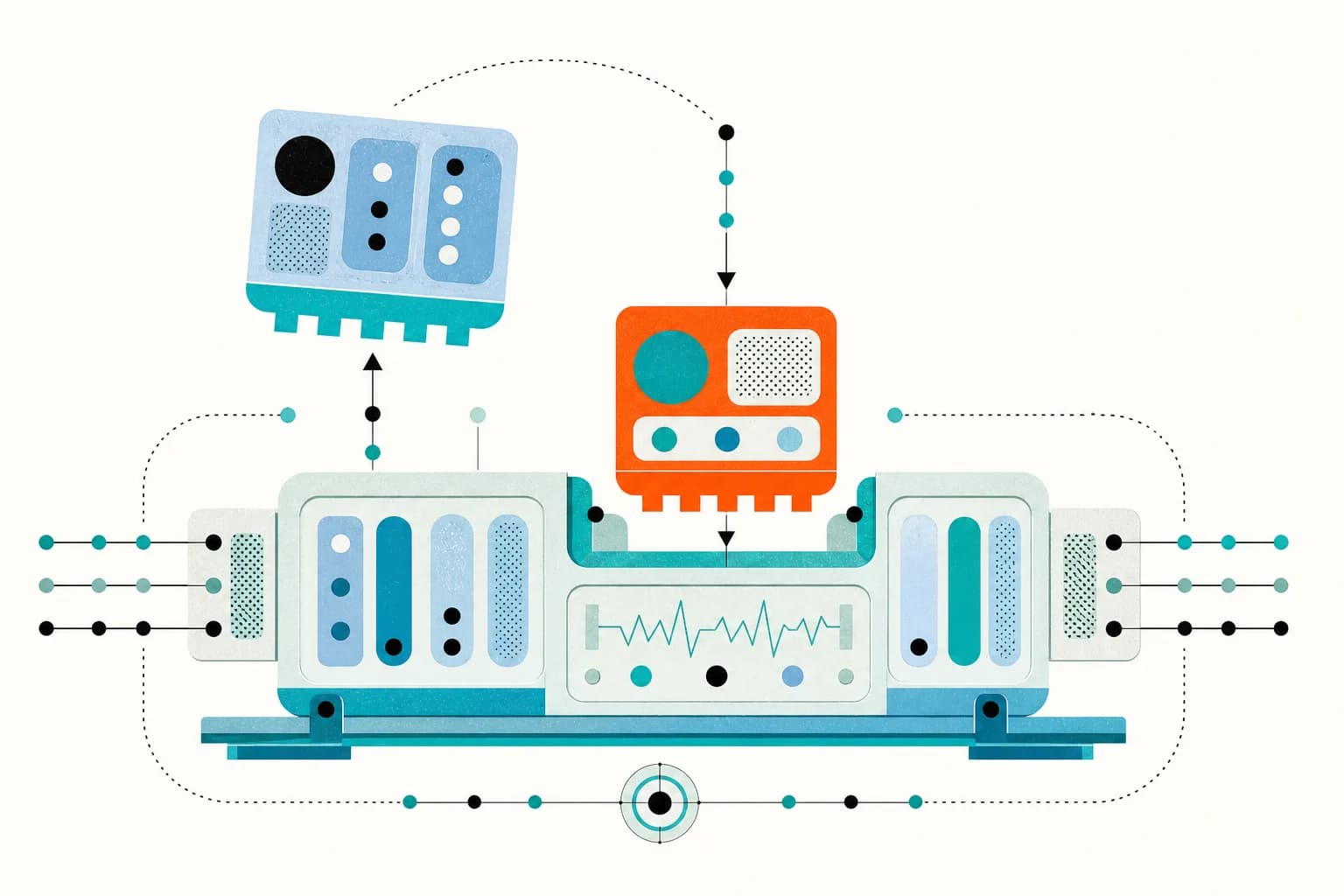
A client lead sets the destination, a senior engineer governs the architecture and directs a compact robot bringing the finished system online

We begin with a strategy call to understand your product goals, user requirements, existing Vue environment, performance expectations, and the business outcomes the application needs to support. This is a working conversation. By the end of discovery, Chromedia has a clear picture of your component system maturity, your Vue version and migration requirements, your rendering strategy needs, your accessibility obligations, and what a successful engagement looks like for your organization, whether that means building a new Vue application, optimizing an existing SPA, migrating from Vue 2 to Vue 3, or adopting Nuxt.js for a server-rendered architecture.

With goals and requirements understood, senior Chromedia Vue engineers design an application architecture tailored to your specific rendering requirements, component system needs, state management complexity, and long-term scalability. Component library conventions, Composition API strategy, Pinia store design, Nuxt.js rendering approach, TypeScript standards, accessibility requirements, and AI feature architecture are all defined and reviewed by human engineers before implementation begins, so every stakeholder has a clear picture of what gets built, how it will perform, and why the architecture is structured the way it is.

Chromedia assembles and onboards the right Vue engineering team for your engagement, integrating directly with your existing frontend, backend, and design teams. We handle team structure and day-to-day management so your internal stakeholders stay focused on the business while senior Vue engineering talent gets to work against the agreed architecture and technical strategy.

Our teams build iteratively through the development, review, and testing phases of our eight-phase AI SDLC. AI tooling accelerates Single File Component generation, composable scaffolding, Pinia store generation, TypeScript type generation, accessibility scanning, and test coverage. Senior Vue engineers review every output against component architecture standards, reactivity correctness, accessibility requirements, and performance benchmarks before any code reaches production. The speed comes from AI. The quality comes from the engineers governing it.

After launch, Chromedia continues monitoring Core Web Vitals, component system health, accessibility compliance, and Nuxt.js rendering performance, optimizing the component architecture and state management patterns as the product grows and Vue's ecosystem evolves. The result is a production-grade Vue application that serves users reliably under real-world conditions and creates a stronger frontend foundation for every feature and AI-powered capability the product builds on top of it.

Schedule Your Vue.js Strategy Call

Engagement Overview

How We Work With You

Flexible engagement models designed to match your delivery goals, internal capabilities, and desired level of control.

Staff Augmentation

Quickly add skilled engineers to your existing team while keeping full control over delivery and priorities.

Learn More

Dedicated Engineering Teams

A stable, fully dedicated team that operates as your own, without the cost of building one internally.

Learn More

Managed Software Development

Chromedia owns delivery end-to-end, from architecture to ongoing support, so you can focus on business outcomes.

Learn More

Why Work with Chromedia?

Bridge Experience & Quality with Affordability

We help you quickly and affordably build a productive AI-forward development team. We provide peace of mind around costs and quality by delivering highly skilled remote employees that can work independently or can integrate seamlessly with your existing technology team.

Reasons Why Chromedia Should Be a Part of Your Growth Strategy

Human-led AI Development

Our employees follow a governed human-led 8-step AI SDLC, ensuring high-quality, secure, and predictable software delivery. For enterprises seeking full transparency, our proprietary 8-phase AI SDLC is available for detailed review.

Explore the 8-Phase AI SDLC

Exclusive Focus

Team members do not juggle multiple projects; they are 100% committed to your roadmap.

Long-Term Collaboration

Chromedia's employees are perfect for complex, evolving projects lasting months or years.

Full Control

You retain strategic leadership over product direction and daily tasks, while Chromedia handles HR, payroll, and infrastructure.

Scalability

Rapidly add highly functioning resources without the overhead of direct hiring.

Massive Cost Efficiency

Reduces overhead by 30–60% by eliminating recruitment fees, office space, and employee benefits while converting variable labor costs into predictable monthly fees.

Faster Time-to-Market

High-performing, integrated units can reduce development cycles and get products to users sooner. Established workflows and parallel workstreams further accelerate release cycles.

Deep Domain Knowledge

Stable teams accumulate insights into your specific business and technical architecture over time.

Less than 3% Turnover

We've worked hard to foster our Chromedia Culture by paying our employees above the top of expected local salaries, providing family-focused generous benefits, giving ample time to relax or travel, and providing a fun atmosphere for us all to get together and bond.

Focus on Core Business Strategy

By offloading technical execution to a Chromedia Team, your internal leadership can focus exclusively on high-impact areas like product vision, marketing, and customer acquisition.

Reduced Management Overhead

Chromedia handles day-to-day HR, administrative tasks, and often project management, freeing in-house managers for higher-level strategic work.

Risk Mitigation and Continuity

Chromedia is responsible for the team's performance ensuring the project doesn't stall.

Immediate Access to Experience

Chromedia invests in AI fluency using the latest tools and development standards as our core business, giving clients access to modern tech stacks without the R&D cost.

Built-in Security and Compliance

Chromedia provides out-of-the-box compliance with standards like GDPR and HIPAA.

Access to Fresh Perspectives

External professionals bring diverse experiences and methodologies from various projects and companies, which can foster innovation and introduce new approaches to problem-solving that the in-house team might not have considered.

24/7 Development Cycles and Infra Support

If you want "follow-the-sun" productivity, offshore teams can handle testing, bug fixes, or support overnight.

Build My AI Team

Frequently Asked Questions